Tired of Family Chaos? This Simple App Brought Peace to Our Home
You know that frantic feeling—kids forgetting homework, partners missing pickups, and you constantly playing referee? We’ve all been there. I used to start each day with a knot in my stomach, dreading the chaos of coordinating our family’s lives. Then we tried something small but transformative: a shared digital tool that quietly reshaped how we connect and manage time. It didn’t just organize calendars—it gave us back calm, connection, and a little more joy in everyday moments. What began as a simple fix for missed soccer games and forgotten lunches slowly became the quiet heartbeat of our home. This isn’t about perfection. It’s about peace. And it’s something any family can build, one tap at a time.
The Daily Juggle: When Family Life Feels Like a Fire Drill
There was a time when our mornings felt like a race against invisible enemies—homework lost in backpacks, permission slips crumpled at the bottom of lunchboxes, and the dreaded 7:45 a.m. panic: “Who’s driving who where?” I remember one Tuesday vividly. My daughter’s school play started at 6:00 p.m., my son had a dentist appointment at 5:30, my husband had a work call he couldn’t miss, and I had promised to bring snacks. By 4:00 p.m., I was already sweating. I called my husband twice. Texted the carpool mom three times. And still, we missed the first five minutes of the play. My daughter didn’t cry, but the quiet disappointment in her eyes hit harder than any tantrum. That night, lying awake, I asked myself: Why does keeping our family moving feel like holding ten spinning plates at once?
The truth is, most of us aren’t just managing schedules—we’re carrying them. In our heads. Every. Single. Day. Researchers call it the “mental load,” and it’s real. It’s the invisible checklist that runs in the background: Did I pack gym clothes? Is the pediatrician appointment confirmed? Who needs a haircut? This constant hum of responsibility doesn’t just tire you out—it wears down your joy. I found myself snapping over spilled milk, resenting small requests, and feeling disconnected even when we were all under the same roof. The irony? We were together, but not really present. We were surviving, not thriving. And the worst part? I thought it was just my job. That this chaos was normal. But what if it didn’t have to be?
How Technology Stepped In—Without Taking Over
The idea of using technology to fix family chaos used to scare me. I pictured cold screens, silent dinners, and kids lost in apps while we drifted apart. I didn’t want more distraction. I wanted more connection. But then I started to see tech differently—not as the enemy of presence, but as a quiet helper. Think of it like this: a good kitchen knife doesn’t cook your meals, but it makes cooking easier. A well-designed digital tool doesn’t raise your kids or love your family—but it can give you the space to do those things better.
What changed my mind was realizing that some apps aren’t built for productivity geeks or corporate execs. They’re made for real people—parents, caregivers, busy humans who just want to breathe a little easier. I began looking for tools that felt human, not robotic. Ones that didn’t demand perfection but welcomed messiness. Tools that reminded us gently, not harshly. And most importantly, ones that brought us together instead of pulling us apart. The turning point came during a weekend when my son asked, “Mom, can we plan movie night like we plan my science project?” That’s when it hit me: what if we treated family time like something worth planning? What if we used a little tech not to control our lives, but to protect them?
This wasn’t about replacing conversation with notifications. It was about using a small digital nudge to create more room for real moments. Less yelling about forgotten assignments. Fewer last-minute grocery runs. More time for bedtime stories, slow breakfasts, and actual conversations. I didn’t want to automate my family. I wanted to free us. And that’s when we began our journey with a shared digital calendar—not as a cold command center, but as a warm, living map of our lives.
Finding the Right Tool: More Than Just a Calendar
When we started looking, I expected to drown in options. There were apps for meal planning, chore charts, homework tracking, and even screen time limits. But what we needed wasn’t another taskmaster—it was a home base. A single place where all the moving parts could live, visible to everyone. I wanted something simple enough for my eight-year-old to use, flexible enough for my husband’s unpredictable work hours, and reliable enough that I could finally stop double-checking everything in my head.
After a few false starts, we found a tool that felt just right. It wasn’t flashy. No neon colors or complicated dashboards. Just a clean, shared calendar where each person had their own color. My daughter’s dance class was pink. My son’s baseball practice was blue. My work meetings were green. And family time? We made that yellow—a warm, cheerful reminder that we were a team. The app showed our days in blocks, like puzzle pieces fitting together. We could drag and drop events, set recurring appointments, and add notes like “Bring raincoat” or “Ask teacher about project.”
But the real game-changer was the reminders. Not the annoying kind that buzz at 3 a.m., but gentle nudges—like a digital hand on your shoulder. “Don’t forget: dentist in 30 minutes.” “Your meeting starts soon.” “Homework due tomorrow.” We set them at levels that worked for each of us: my son liked a 15-minute heads-up, while I needed two. And here’s the magic: the app didn’t just remind individuals. It reminded the family. If my husband had to pick up the kids, the app would send him a notification—and me a confirmation. No more guessing. No more texting during meetings. Just peace of mind.
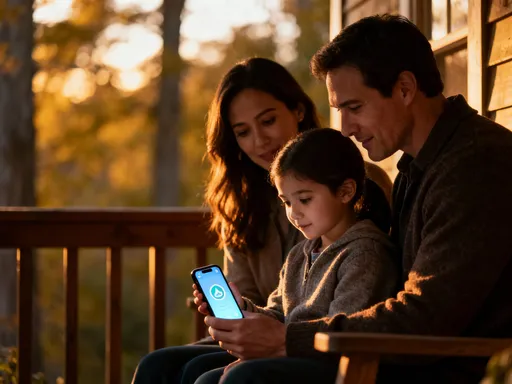
Having one shared view of our week changed everything. Instead of asking, “What’s going on tomorrow?” we could just look. Sunday evenings became planning time—mugs of tea in hand, laptops open, kids chattering about what they wanted to do. It wasn’t rigid. We still had surprises. But now, when life threw a curveball, we could adjust together. The app didn’t run our lives. We did. But it gave us the clarity to do it well.
Small Changes, Big Shifts: How We Started Using It Together
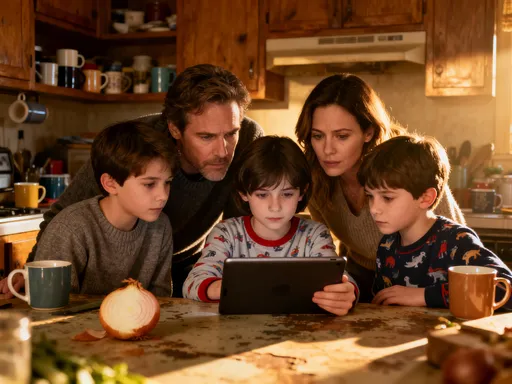
Adopting the app wasn’t a one-time switch. It was a slow, gentle shift. We didn’t force it. We invited it. The first step was setting it up as a family. We gathered around the kitchen table one Friday night—snacks on the counter, music playing softly. I showed them how to log in, how to add an event, how to pick their color. My daughter immediately added her friend’s birthday party. My son wanted to block “Fortnite time” every Saturday. We laughed, but we let him. This was their tool too.
Then came the rules. Not strict ones, but agreements. Like: “If you have something important, put it in the calendar.” Or: “Check the app every morning before school.” We made it a ritual. Every Sunday, we’d do a “family sync.” Everyone shared what was coming up. We’d assign ride responsibilities, plan meals around busy nights, and even schedule downtime. “Can we add ‘no phones after 7’?” my daughter asked once. We did. And we stuck to it—most of the time.
What surprised me most was how quickly the kids took ownership. One afternoon, my son said, “Mom, I have a math test Wednesday. Can you remind me to study Tuesday night?” Instead of saying yes, I said, “Why don’t you add it yourself? You can set a reminder for 6 p.m.” He did. And when it popped up, he actually studied. No nagging. No power struggle. Just a quiet victory. Another time, my daughter remembered her own field trip permission slip because the app reminded her. She printed it, signed it (with my initials), and put it in her backpack—all without me saying a word. That moment? I had to step into the bathroom to wipe my eyes.
It wasn’t perfect. There were days someone forgot to check. Times when a notification got ignored. But the more we used it, the more it became second nature. And the more we saw it as a shared space—not just for logistics, but for care. When I added “Mom’s yoga class,” my son wrote a note: “Have fun, Mama!” That’s when I knew: this wasn’t just a calendar. It was becoming part of our family culture.
Time Became Calmer—And We Became Closer
The first sign of change wasn’t in the app. It was in our tone. The yelling stopped. Not completely—this is real life, after all—but the frantic edge faded. Mornings became quieter. Evenings felt less rushed. We started having actual conversations at dinner. “How was your day?” wasn’t a robotic question anymore. It was an invitation. And we had the mental space to answer.
I remember one Wednesday—once a nightmare of overlapping pickups and homework meltdowns—going so smoothly that I almost didn’t notice. My husband left on time for his meeting. The kids got their snacks. I even had five minutes to sit with a cup of tea before driving to my own event. That night, as we tucked the kids in, my daughter said, “I like our new way. It feels… calmer.” My son added, “Yeah. Less yelling.” We all laughed. But it was true. The app hadn’t just organized our time. It had lowered the emotional temperature in our home.
And with that calm came connection. We started planning more family moments—not because we had to, but because we wanted to. Movie nights. Walks after dinner. Even quiet Sundays with books and puzzles. We weren’t just managing time. We were savoring it. I noticed my husband putting his phone down more. The kids started asking, “What are we doing this weekend?” with excitement, not dread. We began to see each other’s lives—not just as obstacles to our plans, but as parts of a shared story. When I saw my son’s soccer game marked on the calendar, I didn’t just see a conflict. I saw something important to him. And I made sure I was there.
That shift—from chaos to calm, from stress to presence—wasn’t instant. But it was real. And it was worth every small effort. We weren’t just surviving the week. We were enjoying it. Together.
Beyond Scheduling: Teaching Kids Life Skills One Tap at a Time
One of the most unexpected gifts of this little app was what it taught my children. At first, I thought it was just about remembering soccer practice. But slowly, I realized we were building something deeper: life skills. Time awareness. Responsibility. Independence. Every time my daughter added her homework deadline, she was learning to plan ahead. Every time my son set a reminder to pack his cleats, he was practicing self-reliance.
I began to see the app as a gentle teacher. It didn’t scold. It didn’t shame. It just showed the passage of time in a way kids could understand. We started talking about time differently. “How long do you think your science project will take?” “Should we block two nights or one?” “What happens if we don’t start early?” These weren’t lectures. They were real conversations, rooted in real plans. And the kids responded. My daughter began estimating how long her reading would take. My son started asking for “focus blocks” when he had big assignments. They weren’t perfect—but they were learning.
And the confidence that came with it? Priceless. I’ll never forget the day my son told me, “I updated my schedule. I have a club meeting, and I asked Dad to drive me.” No asking me to do it. No hesitation. Just quiet pride in his voice. That moment wasn’t about the app. It was about him stepping into his own power. He wasn’t just a kid being managed. He was a person managing his life—with a little help.
These small digital habits are planting seeds. Seeds of independence. Of ownership. Of emotional intelligence. Because when kids see that their time matters, they start to believe they matter. And that belief? It carries into everything—school, friendships, how they treat themselves. This app isn’t raising my children. I am. But it’s giving me tools to raise them with more patience, more clarity, and more love.
A Simpler, Smarter Family Life—Without Perfection
Let me be clear: this isn’t a fairy tale. We still have messy days. Backpacks still get lost. Someone still forgets to charge the tablet before a long car ride. And yes, there are nights when the app gets ignored, and chaos creeps back in. But here’s the difference now: we bounce back faster. We don’t spiral. We look at the calendar, regroup, and move on. The system holds us, even when we stumble.
What we’ve built isn’t about control. It’s about care. It’s about saying, “Your time matters. Your plans matter. And so does mine.” It’s about creating a home where everyone feels seen, heard, and supported—not because we’re perfect, but because we’re trying. Together. The app didn’t fix our family. We did. But it gave us a framework to do it with less stress and more joy.
Now, when I wake up, I don’t dread the day. I check the calendar, yes—but I also feel a quiet sense of calm. I know what’s coming. I know who needs what. And I know we’ll figure it out. Because we’re not just a family surviving the chaos. We’re a family building something better—one shared event, one gentle reminder, one quiet moment at a time.
If you’re tired of the juggling act, I want you to know: there’s another way. You don’t need a miracle. You don’t need more hours. You just need one small change that honors your time and your family’s. Start simple. Try a shared calendar. Invite your kids to help. Make it yours. And watch what happens when you stop carrying everything in your head and start living—really living—together. Because peace isn’t found in perfection. It’s found in presence. And sometimes, a little app can help you get there.