Sleep Like You Mean It: My Real Talk on Tracking Better Nights
Getting enough sleep isn’t just about feeling less groggy—it’s a game-changer for your mood, focus, and long-term health. I used to toss and turn, blaming stress or coffee, until I started actually *watching* my sleep patterns. What I found shocked me. With simple tracking tools and small tweaks, my energy soared and my mind cleared. This is not a quick fix, but a real, doable path to better rest—no hype, just honest steps that work.
The Hidden Cost of Poor Sleep (What’s Really at Stake?)
Sleep is often treated as the first thing to sacrifice when life gets busy. Many believe that pushing through fatigue is a sign of strength or dedication, especially among women balancing work, family, and personal responsibilities. But the truth is, poor sleep doesn’t just leave you yawning in the afternoon—it undermines your entire well-being. Research consistently shows that chronic sleep deprivation increases the risk of long-term health problems, including high blood pressure, weakened immunity, and metabolic imbalances. What’s more, the effects are not always dramatic or immediate. They creep in quietly, like a slow leak in a tire, weakening your resilience over time.
One of the most overlooked consequences of poor sleep is its impact on cognitive function. You may think you’re managing fine, but studies show that even mild sleep loss—just one hour less per night over several days—can impair attention, memory, and decision-making as significantly as alcohol consumption. Imagine trying to make thoughtful choices about your family’s meals, manage household budgets, or stay present during your child’s school event when your brain is running on partial power. Emotional regulation also suffers. Without enough rest, the brain’s emotional centers become more reactive, making you more prone to irritability, mood swings, and stress overload. This isn’t a personal failing—it’s a biological response to sleep debt.
Another hidden cost lies in the immune system. During deep sleep, the body produces cytokines—proteins that help fight infection and inflammation. When sleep is cut short or fragmented, this natural defense mechanism weakens. That’s why people who regularly sleep less than seven hours are more likely to catch colds and take longer to recover. For women in their 30s to 50s, who often serve as caregivers and household managers, this increased vulnerability can disrupt not just their own lives but the stability of the entire family. Yet, many dismiss frequent illness or slow healing as “just part of getting older,” when sleep quality could be a key factor.
The misconception that “busy equals productive” fuels this cycle. Society often rewards constant activity, and many women feel pressure to prove they can “do it all.” But real productivity isn’t measured by how much you can cram into a day—it’s about how well you can sustain your energy, focus, and emotional balance over time. And sleep is the foundation of that sustainability. Without it, even the most organized schedule collapses under the weight of mental fog and physical fatigue. The irony is that by cutting sleep to gain more hours, you actually lose efficiency. Tasks take longer, mistakes increase, and creativity dims. Better rest isn’t a luxury—it’s a necessity for lasting performance and well-being.
Why We’re in the Dark About Our Own Rest (The Gap Between Feeling and Fact)
Most people judge their sleep based on how they feel in the morning. If they don’t wake up with a headache or extreme exhaustion, they assume they slept well. But this self-assessment is deeply flawed. The human brain is not a reliable sleep monitor. It tends to remember the beginning and end of the night while smoothing over the disruptions in between. This creates a false sense of continuity, even when sleep was fragmented. For example, you might have woken up three or four times during the night but only recall the final stretch of rest before waking. As a result, you believe you slept through, when in reality, your body never reached the deep, restorative stages needed for true recovery.
Sleep inertia is another factor that distorts perception. This is the groggy, disoriented state many people experience upon waking, which can last anywhere from 15 minutes to several hours. If you’re used to feeling sluggish in the morning, you may normalize it, thinking it’s just part of your routine. But this is a sign that your sleep cycle was interrupted or that you didn’t get enough deep sleep. Similarly, micro-awakenings—brief moments of wakefulness lasting just seconds—are common, especially as we age or during periods of stress. These tiny breaks in sleep may not fully rouse you, but they prevent the brain from entering sustained periods of deep or REM sleep, which are essential for memory consolidation and emotional processing.
Mood and memory also play tricks on how we recall sleep. If you had a good day the previous evening—maybe you finished a project or enjoyed a pleasant dinner—you’re more likely to report sleeping well, even if your sleep was objectively poor. Conversely, if you were anxious or stressed, you might believe you barely slept at all, even if the data shows otherwise. This emotional bias makes it hard to separate real sleep quality from subjective impressions. Without objective feedback, it’s easy to stay stuck in a cycle of poor rest, making changes based on feelings rather than facts.
This gap between perception and reality is why so many people say they “sleep fine” while still struggling with daytime fatigue, brain fog, or low energy. They’re not lying—they genuinely believe they’re getting enough rest. But their bodies tell a different story. The solution isn’t to doubt your experience, but to complement it with evidence. Just as you wouldn’t manage your budget based only on how “rich” you feel, you shouldn’t manage your sleep based only on how “rested” you think you are. Objective tracking bridges that gap, offering a clearer picture of what’s really happening while you’re asleep.
Meet Your Sleep Data: Tools That Don’t Judge, Just Reveal
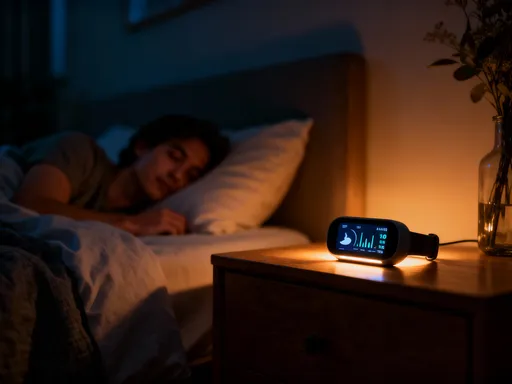
The good news is that you don’t need a sleep lab to understand your rest. Today, there are accessible, user-friendly tools that can give you meaningful insights without overwhelming you. Wearable devices like fitness trackers and smartwatches are among the most popular options. They monitor movement, heart rate, and sometimes even blood oxygen levels throughout the night. While they’re not medical-grade equipment, they provide consistent, trend-based data that can reveal patterns over time. For example, you might notice that your heart rate stays elevated during sleep on nights when you drink coffee after noon, or that your restlessness increases when you skip your evening walk.
Smartphone apps are another low-cost option. Some use the phone’s microphone and accelerometer to detect movement and sound, estimating when you fall asleep, wake up, or experience disruptions. Others rely on manual input, allowing you to log bedtime, wake time, and how you felt the next day. While less automated, these apps encourage mindfulness about your habits and can be surprisingly accurate when used consistently. The key is not perfection, but regularity. Even a simple sleep journal—writing down your bedtime, wake time, and any notable factors like stress or screen use—can uncover powerful patterns when reviewed over weeks.
What these tools measure varies, but most track a few core aspects: total sleep time, sleep efficiency (the percentage of time in bed actually spent sleeping), restlessness, and wake-ups. Some also estimate sleep stages—light, deep, and REM—based on movement and heart rate variability. It’s important not to get caught up in the exact numbers. A wearable might say you got 6 hours and 42 minutes of sleep, but the real value is in seeing whether that’s typical for you, and whether it’s changing over time. For instance, if your average sleep duration drops from 7 hours to 6.2 during a busy workweek, that’s a signal worth paying attention to, even if the device isn’t 100% precise.
The biggest advantage of these tools is their ability to remove guesswork. Instead of saying, “I think I slept okay,” you can look at the data and see, “I was awake for 45 minutes between 2 a.m. and 4 a.m.” This shift from assumption to observation is powerful. It allows you to make informed decisions rather than reacting to vague feelings. And because the data is non-judgmental—no scolding, no pressure—it feels less like a report card and more like a conversation with your body. You’re not failing; you’re learning. The goal isn’t to achieve perfect scores every night, but to understand your rhythms and respond with compassion and clarity.
What Your Numbers Are Trying to Tell You (Decoding the Signals)
Once you start collecting sleep data, the next step is making sense of it. The numbers themselves are not good or bad—they’re feedback. Total sleep time is one of the most straightforward metrics. For most adults, 7 to 9 hours is recommended, but individual needs vary. If your tracker consistently shows less than 6.5 hours, and you’re feeling tired during the day, that’s a sign your body may need more rest. But if you’re getting 6.8 hours and feel alert and focused, there’s no need to force yourself into an 8-hour mold. The key is matching the data with how you feel.
Sleep efficiency—how much of your time in bed is spent actually sleeping—is another useful indicator. A healthy sleep efficiency is typically above 85%. If yours is lower, it could mean you’re spending too much time lying awake, which might point to issues like anxiety, an inconsistent bedtime, or an environment that’s not conducive to sleep. For example, if you go to bed at 10 p.m. but don’t fall asleep until 11:30, and wake up at 6 a.m., your sleep efficiency is only about 70%, even if you’re in bed for eight hours. This explains why someone can “spend enough time in bed” but still feel unrested.
Restlessness and wake-ups are also telling. If your tracker shows multiple awakenings or high movement during the night, it could be linked to factors like caffeine, alcohol, stress, or an uncomfortable mattress. Frequent stirring often correlates with next-day fatigue and brain fog, even if you don’t remember waking up. Similarly, if your heart rate remains elevated during sleep, it may indicate that your nervous system is still in “on” mode, possibly due to unresolved stress or poor wind-down habits. These signals don’t mean you’re doing everything wrong—they highlight areas where small changes could make a big difference.
The real power of data lies in spotting trends. A single night of poor sleep isn’t alarming, but a pattern of short sleep, low efficiency, or high restlessness over several weeks is worth investigating. Look for correlations: Do you sleep worse on days when you skip exercise? After late meals? When you scroll through your phone in bed? These connections help you move from vague concerns to targeted improvements. And remember, the goal isn’t to eliminate every disruption—sleep is naturally variable. It’s about understanding your body’s signals so you can respond with care, not criticism.
Small Shifts, Big Gains: Tweaking Habits Based on What You See
Knowledge is only useful if it leads to action. The beauty of sleep tracking is that it turns insight into opportunity. Instead of making random changes, you can tailor your habits to your unique patterns. Start with one area at a time. If your data shows you’re going to bed later on weekends, leading to “social jetlag” on Monday mornings, focus on stabilizing your bedtime. Even a 30-minute shift earlier can improve sleep quality over time. Use gradual adjustments—going to bed 15 minutes earlier every few days—so your body adapts without resistance.
If your tracker reveals restlessness spikes in the middle of the night, consider your evening routine. Are you drinking alcohol, which may help you fall asleep but disrupts sleep later? Are you exposed to bright lights or screens close to bedtime, suppressing melatonin? Blue light from phones and tablets is a common culprit. Try reducing screen time one hour before bed or using night mode settings. Replace scrolling with calming activities like reading a book, gentle stretching, or listening to soft music. These small substitutions signal to your brain that it’s time to wind down.
Caffeine is another frequent disruptor, but its effects are often underestimated. While many people avoid coffee after noon, caffeine can linger in the system for up to 10 hours, especially in women over 40, whose metabolism may slow. If your data shows delayed sleep onset—taking more than 30 minutes to fall asleep—try cutting off caffeine by 10 a.m. or switching to half-caffeinated blends. Track the change for a week and see if you fall asleep faster and stay asleep longer.
Consistency is the real engine of progress. One perfect night won’t reset your rhythm, but seven average nights with steady habits will. The goal isn’t perfection—it’s direction. Each small adjustment, guided by your data, builds momentum. You’re not trying to overhaul your life overnight; you’re learning to listen and respond. And over time, these tweaks compound. Better sleep leads to more energy, which makes it easier to exercise, eat well, and manage stress—all of which feed back into better rest. It’s a positive cycle, and it starts with one mindful change.
When to Lean on Pros (Knowing the Limits of DIY Tracking)
Sleep tracking is a powerful tool, but it’s not a substitute for medical care. There are times when self-monitoring isn’t enough, and professional guidance is essential. If you’ve made consistent lifestyle changes and your sleep data still shows severe disruptions—such as frequent long awakenings, extremely low sleep efficiency, or signs of breathing pauses—these could indicate an underlying sleep disorder. One of the most common is obstructive sleep apnea, which causes the airway to collapse during sleep, leading to snoring, gasping, and oxygen drops. It’s often underdiagnosed in women, who may report fatigue rather than classic symptoms.
Insomnia that persists for more than a few weeks, despite good sleep hygiene, also warrants a doctor’s visit. Chronic insomnia can be linked to hormonal changes, especially during perimenopause and menopause, when night sweats and temperature fluctuations disrupt sleep. A healthcare provider can help determine whether hormone therapy, cognitive behavioral therapy for insomnia (CBT-I), or other evidence-based treatments are appropriate. Importantly, your sleep data can be a valuable tool in these conversations. Sharing trends with your doctor gives them a clearer picture than a vague complaint of “not sleeping well.” It turns a subjective experience into objective information, helping with faster, more accurate diagnosis.
Other red flags include extreme daytime sleepiness, falling asleep during quiet activities like reading or watching TV, or relying heavily on naps to get through the day. These may point to conditions like narcolepsy or circadian rhythm disorders, which require specialized evaluation. A sleep study, either at home or in a lab, may be recommended to get a full physiological picture. The goal isn’t to pathologize normal variation, but to identify and treat real medical issues that can’t be solved with lifestyle changes alone.
Remember, seeking help isn’t a failure—it’s an act of self-respect. Just as you’d take your car to a mechanic when the engine light comes on, it’s wise to consult a professional when your body sends persistent signals. Sleep is too important to leave to guesswork. With the right support, even long-standing issues can improve. And the better you understand your sleep, the more effectively you can partner with your healthcare provider to find solutions that work for you.
Building a Life That Supports Sleep (Beyond the Tracker)
Ultimately, sleep isn’t just about what happens in bed—it’s about how you live the other 16 hours of your day. A truly restful life is built on routine, environment, and mindset. Start with consistency. Going to bed and waking up at roughly the same time every day—even on weekends—helps regulate your internal clock. This doesn’t mean rigid scheduling, but a general rhythm that your body can rely on. Over time, this makes it easier to fall asleep and wake up naturally, without alarms or struggle.
Your sleep environment matters too. The bedroom should be a sanctuary: cool, dark, and quiet. Consider blackout curtains, a white noise machine, or a fan to block outside sounds. Keep the space clutter-free and reserved primarily for sleep and intimacy—avoid working, eating, or watching TV in bed. This strengthens the mental association between your bed and rest. Choose a mattress and pillows that support your comfort, and replace them when they lose their support. Small investments in your sleep space can yield long-term returns in rest quality.
Winding down is just as important as winding up. Create a pre-sleep ritual that signals safety and calm. This might include a warm bath, light stretching, journaling, or sipping herbal tea. The goal is to transition from the busyness of the day to a state of relaxation. Avoid emotionally charged conversations or stimulating content in the hour before bed. Instead, focus on activities that soothe your nervous system. Over time, these rituals become automatic cues that prepare your body for sleep.
Finally, align with natural light. Exposure to bright light in the morning helps set your circadian rhythm, making you more alert during the day and sleepier at night. Open the curtains as soon as you wake up, or take a short walk outside. In the evening, dim the lights and reduce screen brightness to support melatonin release. Living in tune with light cycles isn’t just nostalgic—it’s biological. When your daily rhythm matches your body’s natural design, sleep becomes less of a battle and more of a gift.
Sleep is not a passive state—it’s an active process of restoration. And you don’t have to accept poor rest as inevitable. With awareness, small changes, and the right support, better nights are possible. Keep listening—to your body, your data, and your need for real restoration. Because when you sleep like you mean it, you live like you mean it too.